
On heung, the madang, and why the most watched spot on the planet was always going to be here | By Michael Hurt (Spring 2026)
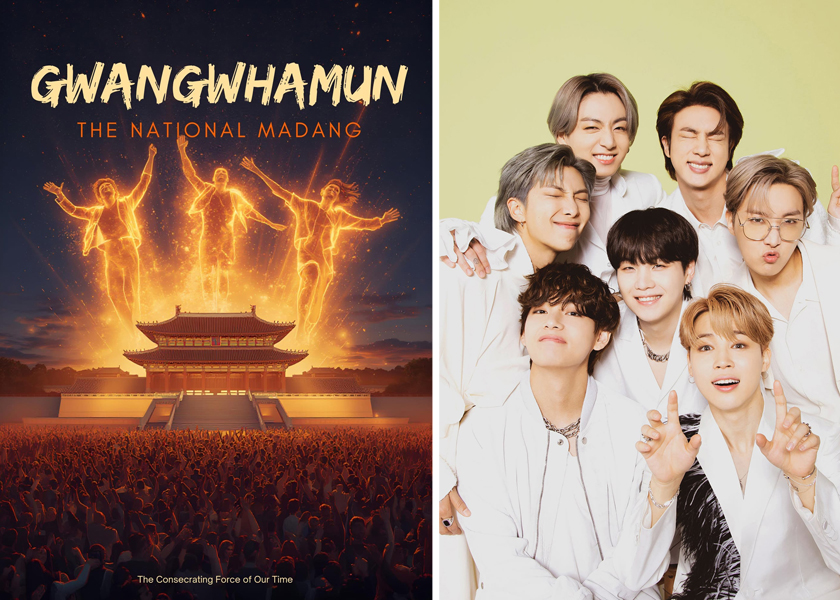
BTS at Gwanghwamun isn’t a logistics problem. It’s a spatial argument.
I’ll admit — I was one of the grumpy ones. Until the morning of the concert, when I went to Gwanghwamun on a pre-scouting mission, felt 흥 (heung) anticipation in the air, and realized that later today this will be the most watched spot on the planet. That changed my mind.
Because Gwanghwamun is a consecrated space. Not metaphorically — structurally. Korea’s most symbolically charged piece of public ground, where collective desire, political will, and raw heung have repeatedly erupted and changed things. Heung resists clean translation — collective euphoric energy, joy with momentum behind it. It’s why K-pop and popular protest have never been entirely separate in Korea: Same fuel, both engines. Like the 2002 World Cup. Or the candlelight protests that toppled a president. That December 2024 and sudden martial law — people traveled from Paju at midnight to go to the capital because they couldn’t stay home.
Every time, the same space. Every time, the same logic.
Ethnomusicologist Donna Kwon’s work on Korean spatial participation theory traces the madang — the traditional courtyard — as collective performance space. The madang isn’t a fixed location. It’s a cultural condition. But some spaces accumulate so much social memory that the consecration is already there, waiting. Gwanghwamun is that space.
Cultural anthropologist Hae-joang Cho documented what happened in 2002 with the bluntness it deserved. Korea had spent decades treating its citizens as laboring subjects — any collective pleasure was denigrated as hedonism. What the World Cup cracked open wasn’t sports fandom. It was Koreans discovering themselves as homo ludens — beings with a right to collective joy. Men in their 30s crying. Strangers embracing. Cho called it an exorcism: Driving out prohibition, replacing it with recovered humanity. What coalesced at Gwanghwamun was a permanent recalibration of what public space was for.
You don’t unfeel that.
That spatial memory doesn’t disappear. It accumulates.
Gwanghwamun is the madang of the nation.
As a place to release Korea’s global heung — and the heung of globality itself — it is the perfect spot.
BTS is the most globally recognized cultural product Korea has ever produced — bigger than Samsung, bigger than any film, athlete, or previous hallyu wave. Tonight’s homecoming concert, their first full Seoul show since completing military service, is not a logistical choice. It’s a return to consecrated ground.
The people filling those streets tonight aren’t mostly from Seoul. They’re from São Paulo, Manila, Paris, Lagos. Bodies from dozens of countries on the same consecrated square, moving together. Not a traffic inconvenience. Cultural reach no urban planner could manufacture.
Gwanghwamun has hosted Korea’s defining collective moments for centuries. Tonight adds another layer.
The grumpy Seoulites will have their streets back tomorrow. This additional consecration ceremony will add another considerably strong impression into popular memory.
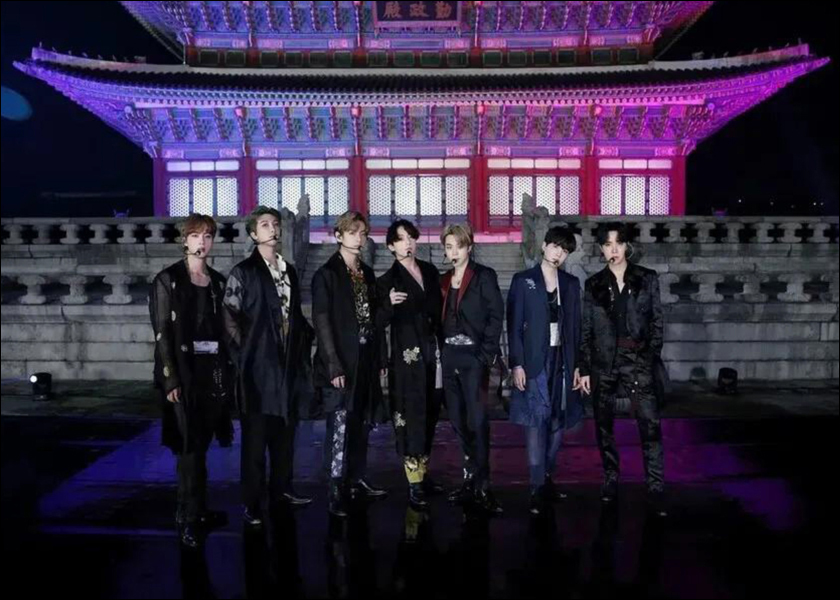
POSTSCRIPT
The concert happened. The streets filled. The grumpy Seoulites were briefly outnumbered by people from across the planet who had traveled to stand on ground they’d never stood on before — but somehow already knew.
That’s the thing about consecrated space. It doesn’t require explanation. It transmits.
Gwanghwamun has one more layer now. It will hold it the way it holds all the others — not as an archive, but as an accumulation. The next timeheung erupts on that square, and it will, the bodies filling it will be standing on top of tonight without knowing it.
That’s how madang works. That’s always been how madang works.

