Wandering in Korea, hikers can experience the raw power of Korea’s mountain places | By David Tizzard (Fall 2025)
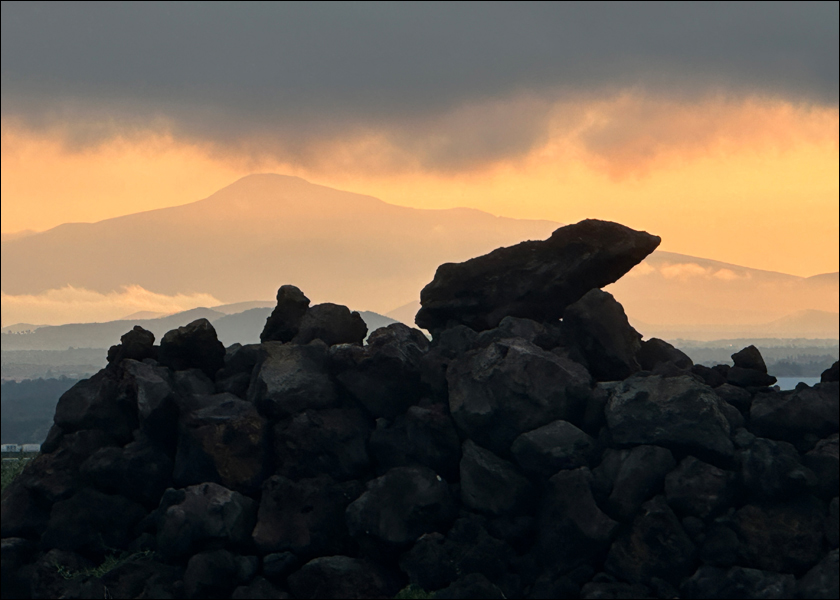
Cities tell you what a country builds. Mountains tell you what it believes. And so I learn more about Korea when I walk within it, losing myself in the mountains, venturing further and further outside of Seoul. Here the mountains sensitize you. They are intense. The light seems brighter, snow is whiter, the air that hits your lungs is like a live wire It’s transformative.
Mountains are dangerous. The danger is palpable. In the mountains, everything crackles and tingles. There are rocks, ice, water, sun, snow, bugs, bits of things that have no name, paths that have no handles. It is life without a safety vest.
Contrast this with the average coffee shop in Namdaemun: There is very little in the way of vertigo, very little that hums with risk. Yongsan department stores, Hongdae hangouts with their colors in neon — alive, yes, but not alive in this way. And because mountains are alive, you have to be alive and watchful. There is a constant risk assessment taking place. Are those rocks safe? Is the heat okay? That’s not a snake, is it? Yes, actually it is. But it’s small. Don’t worry. Just watch out for the next few steps.
To pay such close attention to your surroundings makes you more alive to the world. It makes me more alive to Korea; to its past and people. Mountains wear away the usual barriers we build around our neoliberal selves in the city. There’s no tie here, no makeup, no curated self; only sky, stone, and breath. You are a person dwarfed by heaven.
The mountains offer us Asian sensibility in the way referred to in Japanese as mono no aware — the pathos of things. It is an understanding that everything you see is bespoke, a moment made just for you. At this moment, there is this moment only. So we should wake up, and look at it.
In these wild and remote places of Korea, phones don’t even work. Even when they do work, they can’t catch the sanguine sky at dusk, the scent of pine, that texture of light on granite. We will never be able to capture the moment with language or technology, nor should we try. To attempt it would be to imprison what exists to be free.
And so, I like to lace up at dawn in the half-light, starting from a village that is still groggy from its noraebang dreams and soju hangovers. As I trudge away from civilization, the granite shoulders of the mountains rise in the distance, like monks cloaked for morning meditation. Each apex is a different shape. It is a different monk with a different personality and a different teaching to impart. These mountains are not mute. They are storytellers. These are Korea’s old texts, older than Hangul, stories etched in stone, wind, and rain.
I leave behind traffic and every sound that people make. Asphalt gives way to pine needles. Feet find the earth. The breath deepens.
Not quite a God
I pass a group of fit-looking ajummas: Older women clad in electric-colored hiking gear, eyes laughing, voices carrying down the trail. The women you meet out here are different from the softer, rounder, variant you see on buses. The mountain ajumma is slender. They are lean, quieter, faster. Their hair is straight rather than curly. They offer me some peeled apple slices. Their eyes glisten. I bow, thanking them by saying “samneeda.” The first few syllables of my Korean thank you are lost in the air and the descending bow as my eyes travel down.
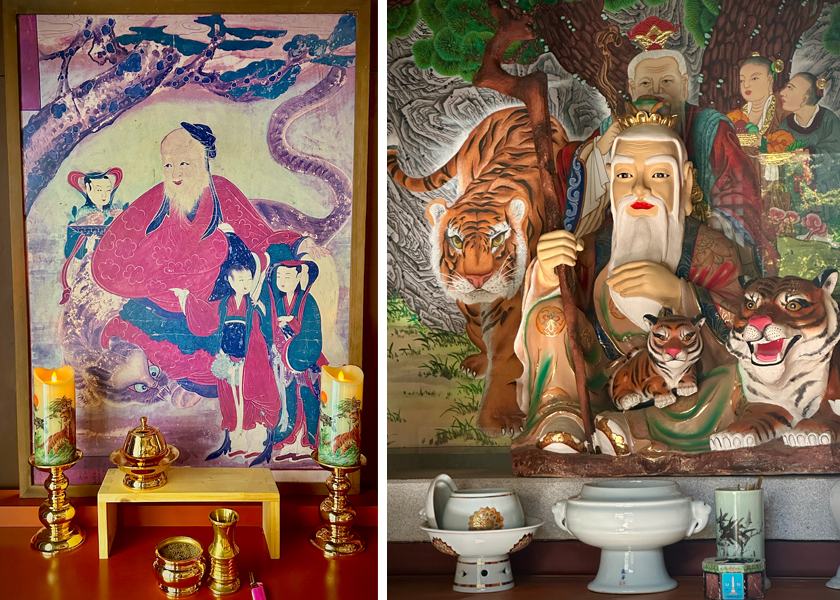
Mountains have long been sacred in Korea. They are the Land, with an intentional capital letter. They are the place where you meet the Sanshin (the mountain spirit). One can find depictions of the Sanshin. His, or her, portraits or statues can be found in painted pavilions, often tucked behind Buddhist temples. The Sanshin is shown as always watching, with the male depictions always smiling beneath a white beard. The Sanshin is part myth and part ancestor. They gave people ginseng to keep them alive. Climb just high enough that the air thins, and you might feel this Spirit before you seeing the male, female or hybrid male-female form.
Sanshin is not quite a god. But not a ghost either. He (I wonder whether the pronoun is correct?) is something in between. He seems to be more a principle than a person. He belongs to no official pantheon of gods. He simply is. His existence is accepted the way one acknowledges the coming of rain. Some say he is the father of Korea’s first man and founder, Dangun. Birthed at the origin of the Korean people, part bear and part myth, Dangun is regarded as a full ancestor.
My father-in-law still grimaces when I accidentally refer to the Sanshin as a myth. My kids sing his song at the local school. Others say Sanshin is the spirit of the mountain itself: A soul made of roots and wind and ancient knowing. What strikes me most is that Sanshin survives. In a country of 5G towers and KTX trains, of skyscrapers and social media, this old spirit still holds ground. He is not jealous. He does not demand worship or tithes. He simply is.
Korea’s mountains teach impermanence in their own tongue. In spring, cherry blossoms write poems on the path. In autumn, danpoong (fall foliage) paints the slopes in red, gold, and rust. Each leaf is a firework of death. And in winter, snow weighs the trees until they creak in resignation. The Korean word sunhwan (cycle) lives here. Nothing is lost, only transformed. Things return to their place of beginning. Spring, summer, autumn, winter… and spring again.
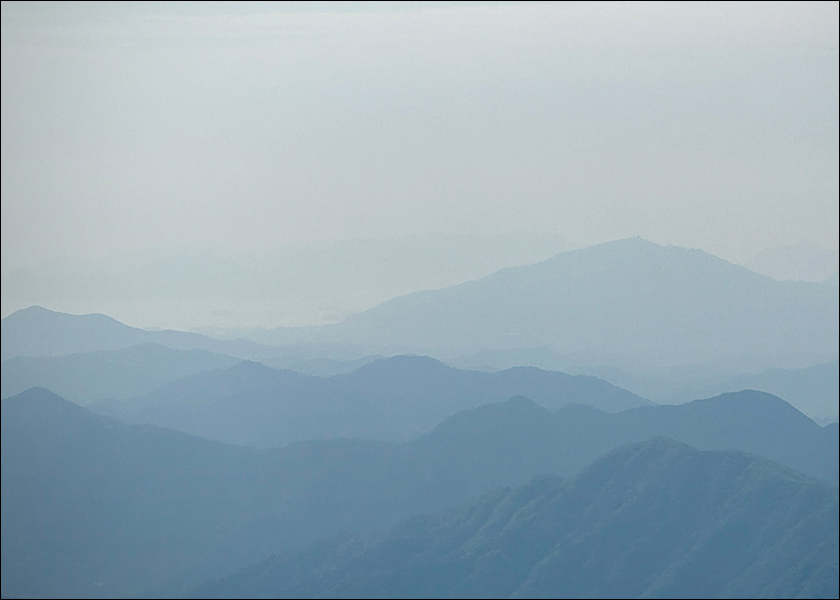
Maybe that’s what the mountains really teach us: Rhythm. A rhythm forgotten in the hypermodernity of the capital, where we experience only the endless loops of franchise coffee and scrolling screens.
On a narrow pass above the tree line, with nothing but wind and your heartbeat for company, the world is reduced and made whole, all at once. The body feels its edges again. The self is clarified. Here, you have no name. Only spirit.
In this stark environment, we can see the world not as something to be owned or consumed, but something that lives through us. The mountain does not belong to Korea. Korea belongs to the mountain. And for a few hours, should you choose to venture out, so do you.