A young woman’s reflections on self-expression and connection through the tradition of bojagi | By Emerson Grace Vahlsing (Spring 2026)
It is the first day of school, and it is hot.
My hand is sticky as its palm presses closely to my mother’s. My body is slick with sweat, and the bottoms of my feet suction slightly to the soles of my flip-flops before they release, hitting the ground with a smack.
I always walked to school. It was just across the street.
Approaching the door, my mother tries to let go of my hand, but I keep my palm glued to hers. I am sad to leave her, but she insists I let go.
I let go.
Her skin is replaced by soft cotton and loose, silk thread.
I am holding a bojagi, something to hold when my mother’s hands can’t reach me.
I walk into school. It is the first day of kindergarten.
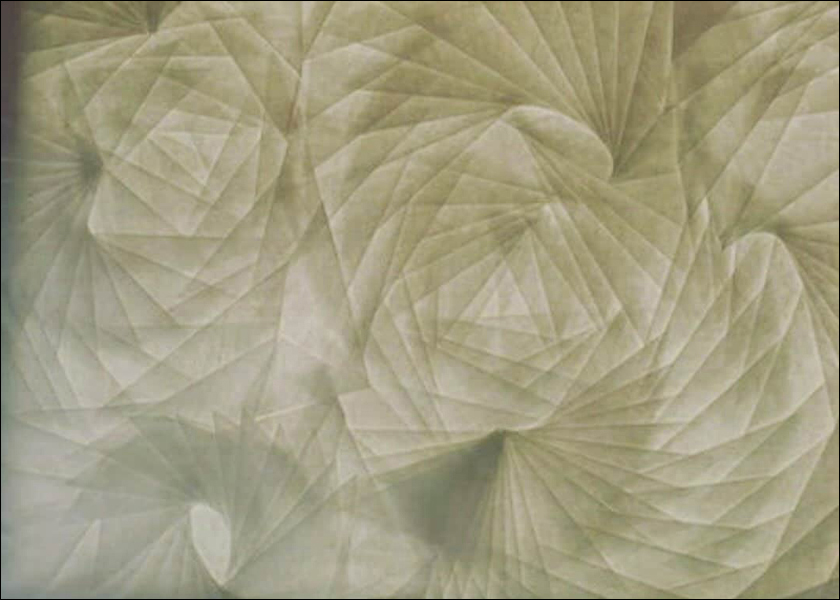
Bojagis are Korean quilts. They are patchwork, often square, and it doesn’t really matter the fabrics you use to make one or the thread you use to stitch it.
A bojagi is good fortune, it is warmth, it exists no matter social class, it is vibrant, it is strong, it has no right or wrong side, it is.
Growing up, I always had to look twice before I sat down anywhere, because my mother used the arms of our chairs and couches, the plush surfaces of our pillows and blankets, as pincushions for her sewing needles.
Loose threads clung to my clothing and scraps of fabric littered the floor.
And I never minded, and you would never notice, because instead
You’d see the beauty of my mother’s bojagis draped over furniture, lining the dining room table, stacked up in a disheveled pile next to the television.
To grow up with my mother was to always feel as if you were amidst profound creation,
And that in that process, you too were constantly being created.
As an only child, I always loved to talk about myself.
And so when adults would ask me what I wanted to be when I grew up, I would proudly say I want to sew.
And I knew that, through this, I could, and, more importantly, I would, be carrying my mother and my Korean halmonis with me,
Every fiber of their being,
In my palm
Every stitch
An honor.
But
Eventually, people will ask you what you want to be, and when you respond earnestly that you want to do something they have prescribed as nothing more than a passion project, something happens where they start to say Well of course, but what do you want to do, really?
And it gets harder to defend something you love,
Or maybe not harder, but more embarrassing? Exhausting? How do you justify what you want to do to people that have already decided it is not something meaningful enough to be worth wanting? Anyway, this really means that there came a day where
I rejected my sewing machine and my spools and my bobbins and
I threw them into bins and slid them under my bed and
I forgot about them
And I decided to tell everyone I wanted to be a lawyer instead.
But your mind is creative, my mother urged me.
I did not listen.
And so
I started to unravel, and I didn’t even realize it.
And I frayed, and frayed.
But when you are lost, the threads of your ancestry, woven deeply within you, will tug at you, and they will call you back.
Your veins are nothing but blue and red fibers that intertwine in your being to connect you to the women that you will never meet and never know. But they know you. They will guide you.
I rejected and resisted and fought and tried to ignore
But, ultimately
One day,
After an awful experience at the internship that I killed myself to get,
My body covered in goosebumps from air conditioning when it should have been covered in sweat under the rays of the sun,
After realizing that my plans for the future were falling apart because I felt so little satisfaction, so little joy,
I found the threads of my body whispering to me, come back.
What you need is often what you push into the corners or under your bed
And leave in the dark to collect dust.
6 years of forgetting
An old machine.
Blue, white, green thread.
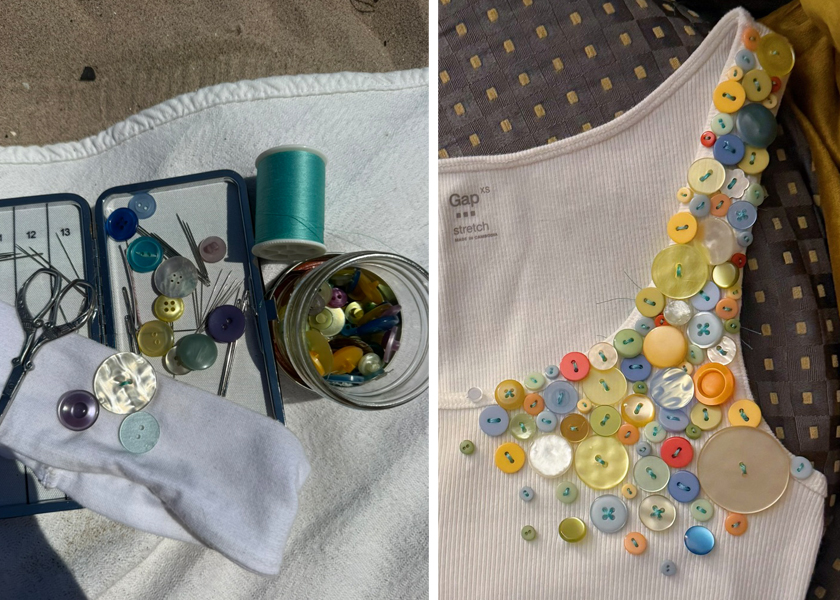
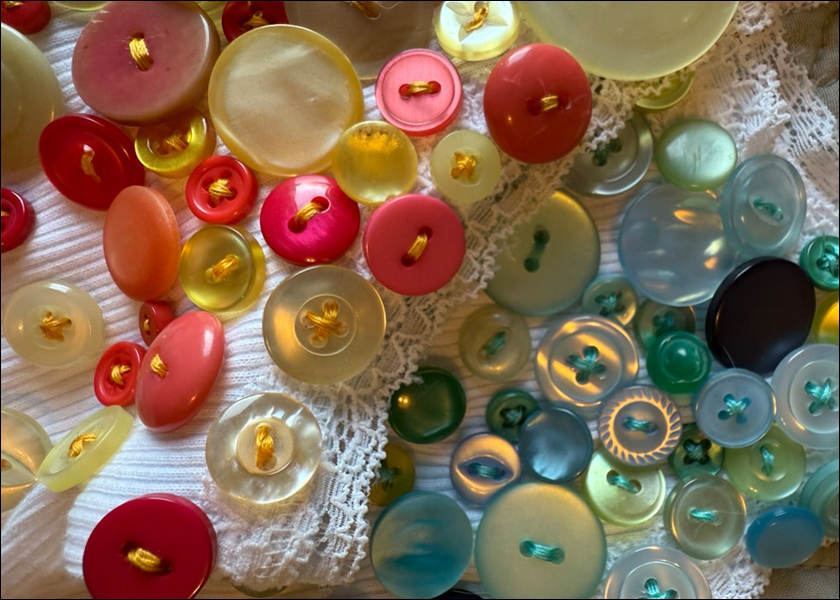
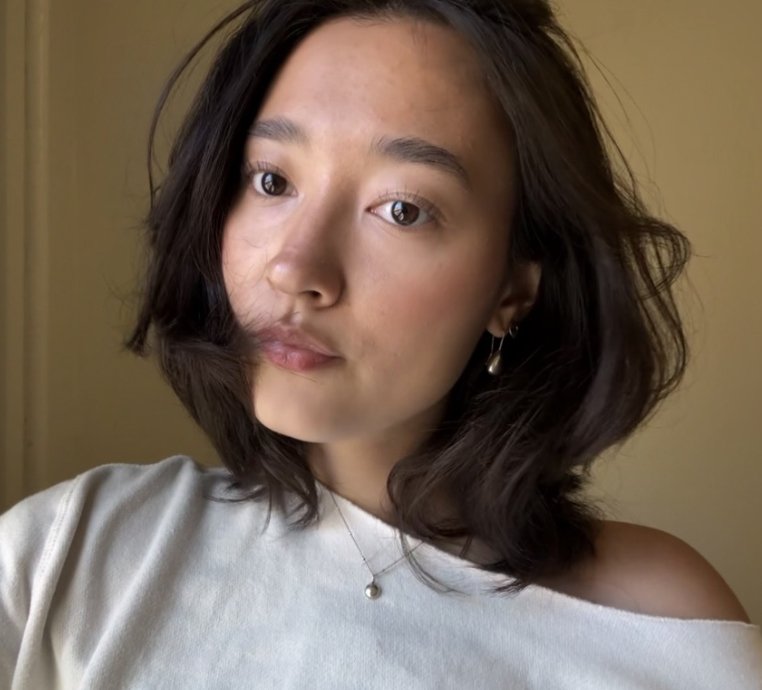
A handful of buttons.
I thread a needle
And get to work.