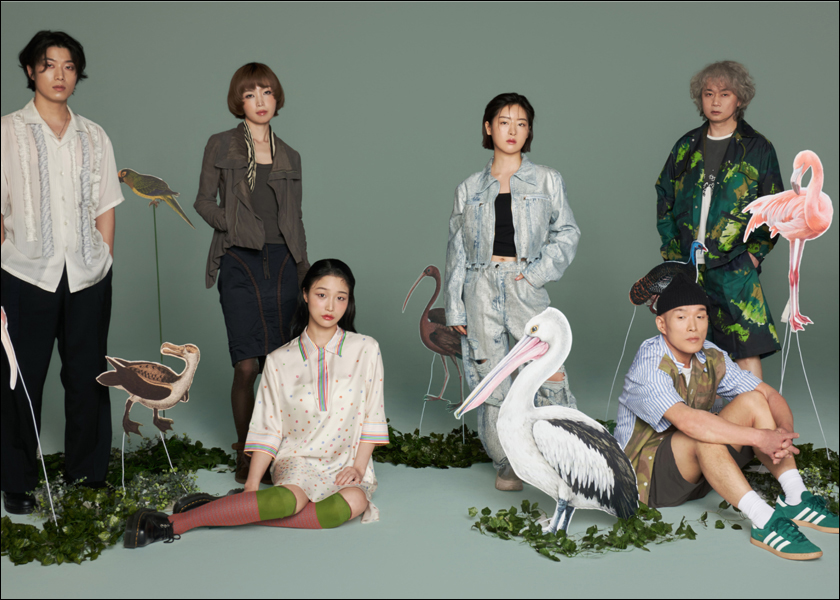
Korean band Leenalchi introduces U.S. audience to its edgy pop with ancient roots | By Martha Vickery (Fall 2026)
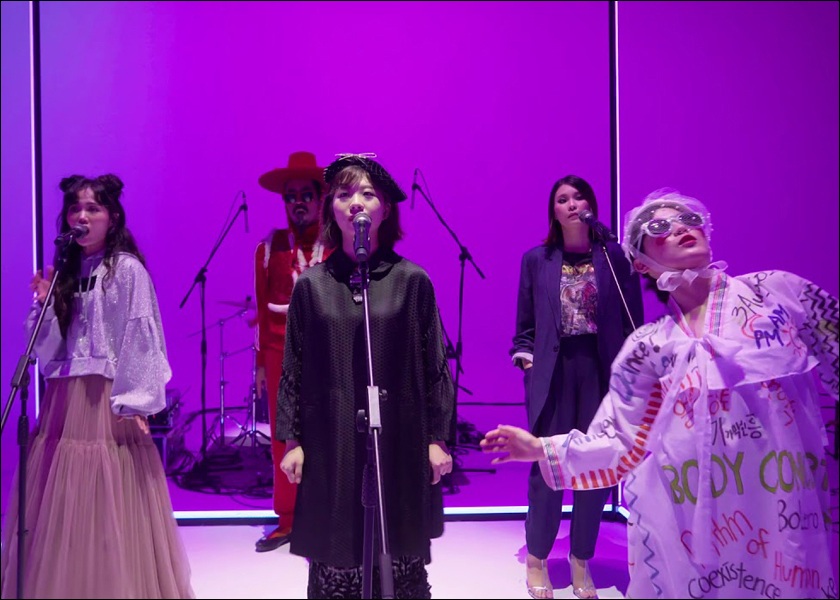
Korea’s ancient stories are full of wondrous creatures – wise dragons, clever rabbits, stupid tigers and kings that live under the ocean with sea serpents. These magical beings may not come up in daily conversations, but they reside deep in the Korean psyche.
The same characters that reappear in folktales have worked their way into many folk songs and longer sung stories (pansori) from ancient times. These persistent beings have lately discovered and inhabited Korean pop songs, including those of the Korean alternative pop band Leenalchi. The band will have its Minnesota premiere at the Cedar Cultural Center on November 7
Descendants of the Dragon King
Leenalchi was formed in 2019, when composer/bass player Young Gyu Jang selected and invited certain classically-trained Korean musicians and vocalists to record a music score. One of those was vocalist Yi-ho Ahn, a co-founder and current Leenalchi member, who answered an emailed interview from KQ.
Ahn said the original score he and others were invited to sing was written for an animated musical called The Dragon King, staged at the Asia Culture Center in Gwangju. The musical is an adaptation of the traditional folk tale known as Sugungga. To their delight, the music was a big hit with the audience. “We figured it would be fun to perform just the music, and it worked out great,” he explained. “That’s how Leenalchi came to be.”
In addition to singing for Leenalchi, Ahn also co-writes and composes the band’s music with founder and director Jang. Korean traditional sounds are still quite new to American ears, but Ahn explained that the Korean bands who compose and play music drawn from ancient musical traditions, like Leenalchi, SsingSsing, and Sangjaru (which performed for the first time in Minnesota in September), are not really a new thing anymore.
“There are actually more of these bands than people would think, and they’ve been around longer than they might expect,” Ahn explained. “However, it’s very rare to find a band that operates with such a clearly defined musical direction across all their creative and operational choices like Leenalchi does.”
In 2020, Leenalchi took South Korea by storm with its music for a series of Korea tourism promotional music videos, Feel the Rhythm of Korea, created in collaboration with Ambiguous Dance Company and Korea Tourism Organization. In the videos, dancers wearing bizarre, Korean-inspired costumes strut and dance to Leenalchi’s music in front of some of South Korea’s most ancient and modern sites. Audiences in the U.S. and other countries also saw the music videos. Since then, the band gained a global fanbase, completing a tour in the U.K. and Western Europe in 2025.
Music that defies a category
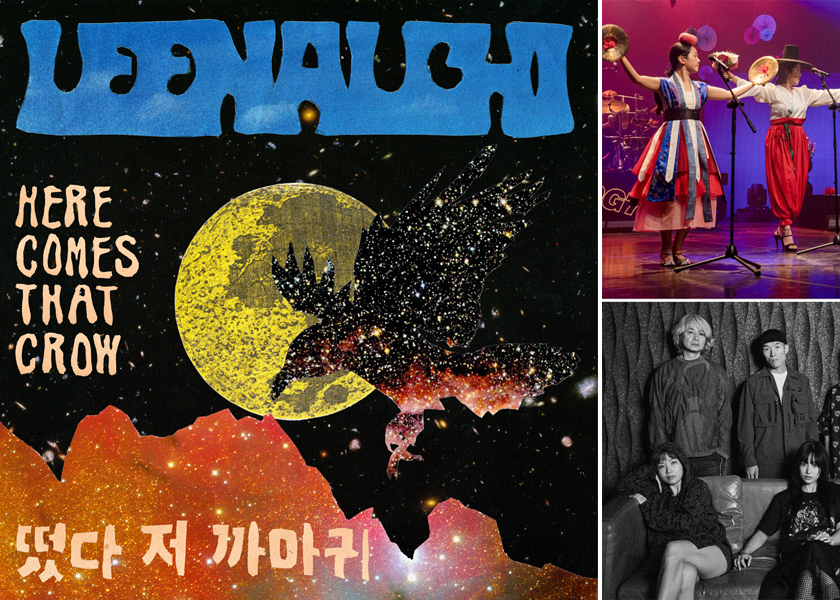
Culture writer Shannon Lee wrote on the band’s own website to try to describe the character of their music. The band always sings in Korean, and about folk stories most Westerners have never heard told. However, Lee explains, it’s likely that a lot of Koreans could not tell you what Leenalchi’s songs are really about either – they may understand enough to know that it is a Korean folktale, and that “it may be something about a rabbit’s liver, or something about a soft-shelled turtle,” she writes.
Lee describes their lyrics as poetic, allegorical, and also buried in the ancient tradition of pansori, musical sung-storytelling, a kind of cross of opera and folk stories, “rooted in shamanism and developed in the Joseon Dynasty (17th century), these songs tell epic tales of love, virtue, sorrow and dragon kings.” Its folk tradition roots are interesting and one of Leenalchi’s superpowers, but they are not the whole point. While the stories are ancient, the songs are edgily modern. They are also fun and approachable.
The interesting part is the beautiful final product Leenalchi produces through their deep training in ancient music, and their driving rock/funk/pop style. In the psych pop indie music scene in Korea, there is agreement that Leenalchi represents a radical branching off, an alternative to the very produced, choreographed, and (some would say), more predictable creation of the Kpop scene.
Teamwork makes new music
Born in 1968, composer/leader Jang has been on the inside track of South Korea’s music scene for a long time. Significantly, he witnessed during his musical career how hallyu, the Korean wave of pop culture, including popular music, was spread to every country in less than 20 years. Fast-forwarding to the present, Jang is now a major player in the country’s small but dedicated indie music scene; he is also a prestigious film composer, who has scored soundtracks for some of Korea’s most celebrated movies like Train to Busan, The Wailing, and The Good, the Bad, the Weird.
Jang began to work with music from the pansori tradition in 2007, after composing a piece entitled Bari for choreographer Eun-me Ahn. Working with musicians from that project, Jang went on to several other projects, and eventually helped to found several groups, including BIBING, SsingSsing and Leenalchi.
Ahn described how their group process of songwriting works in recent times. “Our songwriting process is a bit unconventional,” he said. “People usually expect us to pick a pansori passage first and then build an accompaniment around it, but it’s the exact opposite.”
Instead, he said, composer Jang often brings them short musical phrases to ruminate on. He depends on their imaginations and wide knowledge of folk songs and pansori compositions to come up with a match with some lyrics. “The vocalists (sorikkun) then test-fit various pansori passages onto those phrases,” Ahn described. “Once we select a matching passage for a phrase to build a primary framework, drums and bass can come in (to create) layers of multi-dimensional texture.” Ahn said that bassist Seo-jin Ra added that in the final evaluation “respecting both elements – the pansori elements and the pop elements – are equally the most important thing.”
A reviewer on the Instagram page of radio station KCRW wrote a mini-review of the band, that Leenalchi succeeds in “taking the pansori tradition and bringing it starkly to the present, bringing a wildly kinetic sound, from elastic basslines (with not one, but two bassists), drums, and a chorus of voices and personalities that can move from whispering ideas to full-throated release in a matter of seconds.”
In pursuit of sound quality
Pansori singers are trained in a rigorous and particular way. In tradition, singers in training build their strength and volume by practicing next to a waterfall, not only to be able to project their voices over the noise but also to be able to replicate the water sounds and other natural sounds. Pansori singers have a range from low and gravelly to the sweetest and most delicate soprano.
Leenalchi creates its music with only western instruments, but only traditional Korean vocal sounds. The usual line-up for Leenalchi is to have two bassists and a drummer play rhythms back and forth, and vocalists (all trained pansori singers) trade lines, emotions, sung conversations and harmonies. Ahn’s colorful voice supplies much of the gravel, the roar, and the range that makes pansori so thrilling. The three women singers on the U.S. tour – Soo-bum Park, EJae, and Su-in Choi – bring the delicate and skillful vibrato, and can all belt out the powerful and piercing high notes which are so characteristic of the pansori style.
As Lee’s review suggests, there are many “soris” (or sounds), in pansori to listen for, also present in Leenalchi’s compositions, including animal and nature exclamations, like “hee-hee,” “hut-hut,” “ssukguk ssukguk,” or even bird-like sounds such as “joorooroo,” or “lala lala.” The result is music that contains story, language, and sound effects, giving the listener a sense of the lyrics, even in a language they do not understand.
As the KCRW reviewer put it, “The arrangements are brilliant and leave room for every rhythmic twist, but the perceived effect is anything but minimal. Voices bend and play around the beat while the rhythm section holds everything down, locked into a pocket that feels equal parts ancient ritual, psychedelic funk, and left-field pop.”
As with all expertly-performed music, the virtuosity of Leenalchi’s musicians creates a loose feeling. They exchange looks, seem to ask questions and answer one another musically, and the result is delightful. As KCRW’s reviewer observed, “Leenalchi aren’t treating tradition as something preserved behind glass. They’re playing with it and showing us how it can be flipped, reverse-engineered and renovated.”
The real Lee Nal-chi
In naming the band, the group chose the name of a real pansori master who became something of a folk hero in the late Joseon era (1880s). Lee Nal-chi started out his performing career as a traveling tightrope walking (jultagi) performer. Born into a low social class, as the son of a servant, he began by joining a troupe of street performers (gwangdae). That he achieved in the highly-skilled profession of pansori in those times of a tightly-controlled class structure gave him folk hero status.
The Korea Herald reported that author Da-Hye Jang is writing a fictionalized account of the mysterious pansori master’s life, and the story is slated for a new drama series. Like the folk hero, the band may have also been in the “unlikely to succeed” category in the beginning, but like their namesake, has beaten the odds with their skills, talent and persistence nonetheless.
Appreciating the audiences of their first U.S. tour
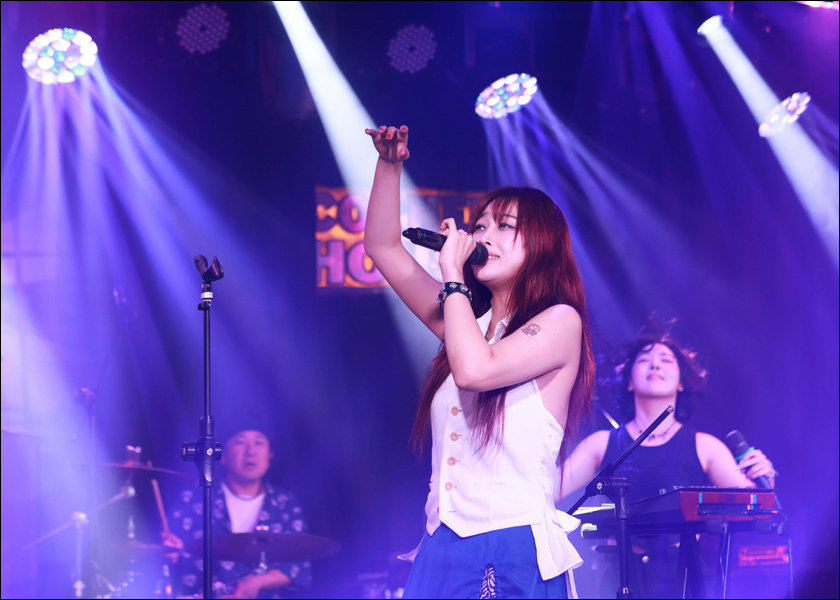
Ahn understands Korean audiences the best, but believes they don’t necessarily have the advantage over non-Korean speakers. They may place too much emphasis on the idea of pansori, he said. “Because they focus on understanding the “tradition” or the “narrative content,” it sometimes ironically gets in the way of just enjoying Leenalchi’s music,” he remarked. “U.S. audiences, on the other hand, seem to let go of trying to decode the content or lyrics, and focus on a more immediate musical experience.”
There is storytelling and comedy within the music, he said. And, “If you understand the lyrics and catch the unique humor in the narrative, you can enjoy Leenalchi from another angle — but there’s no need to feel like you’re missing out if you don’t. Leenalchi’s music is intended much more for listening and dancing than storytelling. So, if your shoulders and hips are swaying and your feet are tapping while listening, you are already enjoying Leenalchi to the fullest.”
His wish for Leenalchi’s music is that it penetrates the listeners’ daily lives in a positive way. “I dream of music that shakes off the fatigue of the commute, blows away the nagging from your boss, and drowns out the noise of the vacuum cleaner.
Tickets for Leenalchi’s November 7 performance at the Cedar Cultural Center are at the Cedar’s box office website, and information about the ongoing U.S. tour is on the band’s website at this link.