
Inheritance ~ By Jane Park
Debut novel describes a daughter’s search for understanding about her immigrant parents’ past and her isolated rural upbringing
(Pegasus Books, New York, 2026, ISBN #979-8-8971-0069-9)
Review by Joanne Rhim Lee (Summer 2026)
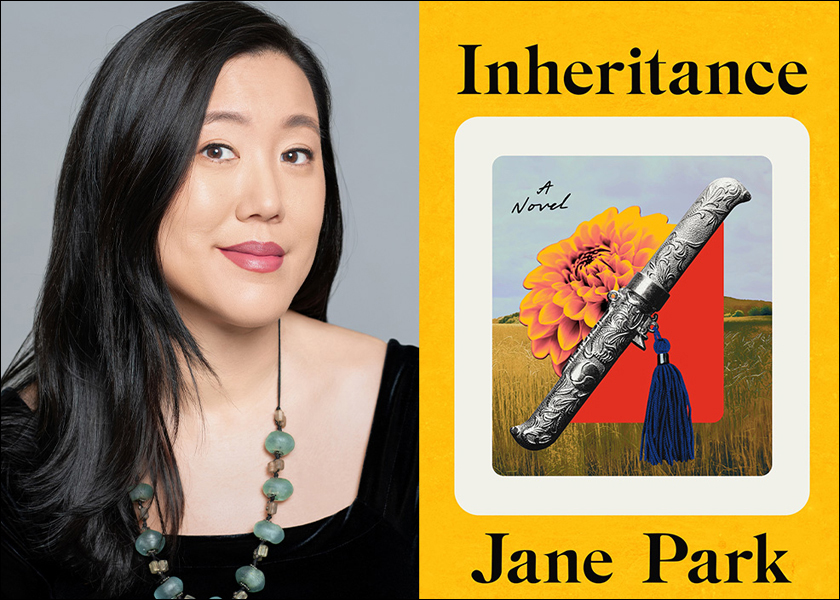
Anne Kim is a successful attorney in New York City who returns home to Edmonton, Canada after her father’s sudden passing. Even though she has an older brother Charles, who never left home, Anne has always been the responsible one, so she reluctantly returns to help her mother prepare for her father’s funeral. In doing so, she uncovers many family secrets and learns that not everything was as it seemed years ago, when she was growing up with her Korean immigrant parents.
This is the intriguing premise of Inheritance, Jane Park’s debut novel. Like her main character, Park also was raised by Korean immigrant parents who ran various small businesses in rural Canadian prairie towns. Park’s story is classified as fiction. Still, there are themes in the book which will ring true to many adult children of Korean immigrants, including having hard working, self-sacrificing parents who valued education above all else, and who suffered painful generational trauma from the Korean War and from their inability, or unwillingness, to process it.
When Anne first arrives home, her Gomo (father’s sister), who has just arrived from Korea, hands her a mysterious stack of envelopes. In one fell swoop, Anne learns two shocking facts — that her father was actually from North Korea, and that he had a younger brother named Maknae whom he somehow had never mentioned. Anne’s father and aunt escaped to the South during the war, but Maknae was asked to stay home to take care of their father. Anne’s father wrote dozens of letters to Maknae over many decades, addressed to his sister’s house in Seoul, but Maknae never received them. Gomo saved the letters and presented them to Anne.
Through flashbacks, we learn that there were many other pieces of information hidden from Anne and Charles while they were growing up in Canada. As children, they often wondered why they ended up in a rural town in Canada with no other Koreans within hundreds of miles. Their father worked to become a welder. He would leave for months at a time for his job. Later, her parents bought a struggling grocery store in Crow Plains, a new rural town, despite having no experience in retail sales.
Anne’s name was originally Eun-ah, but she received a new name from her teacher on the first day of school. The kids at her new school made fun of the way the kimbap in her lunchbox smelled, so she left her Korean lunches at home under her bed, and then ravenously ate them after she came home from school. At recess, the girls called her “Chingaling Chan” and made up rhymes for her new nickname while she jumped rope.
The indignities continued — small wounds that would shape the woman she would become. At the first parent-teacher conference, Anne’s teacher told her mother that she was too quiet in class, and recommended that they start speaking English at home. That very evening, her mother declared that they would no longer speak Korean at home, even though she and her husband barely knew any English themselves. They began addressing each other by their new English names, and a new formality entered the home, creating distance between the parents and their two children.
In middle school, Anne finally made a close friend. Meredith was pretty, popular, and rich, and her parents often invited Anne over for dinner and sleepovers. Meredith’s father told her that his uncle fought in the Korean War, but Anne was confused. Was there a war in Korea? When she asks her father if he knows about this war, he answers vaguely, and she is left with even more questions.
In the present day of the story, Anne does not speak, read, or write Korean, and struggles to read the letters from her father to the younger brother Maknae. How can one be raised by Korean immigrant parents who don’t speak English, yet bring up children who do not know the Korean language? This is a conundrum experienced by many second-generation immigrant children who were told to “succeed” at any cost, including losing their native language and their ties to their parents and culture.
Anne continues to push her mother for more information about her family’s history, but she gets a lot of push back. In her mother’s opinion, the past only contains pain, and it’s better to move forward. Her mother has lived a difficult life, including being married to a man with depression and anger. She has always carried a deep sadness, even as she tried to put on a happy face.
Anne’s week in Edmonton brings many new revelations, both about her family and about herself. What has she inherited from her parents? Their small plot of land in Crow Plains? Their generational trauma? Their strength and fortitude, despite all the odds against them?
Jane Park weaves many themes about the Korean immigrant experience in her brilliant debut novel, one that will have readers anxiously awaiting her next work.


