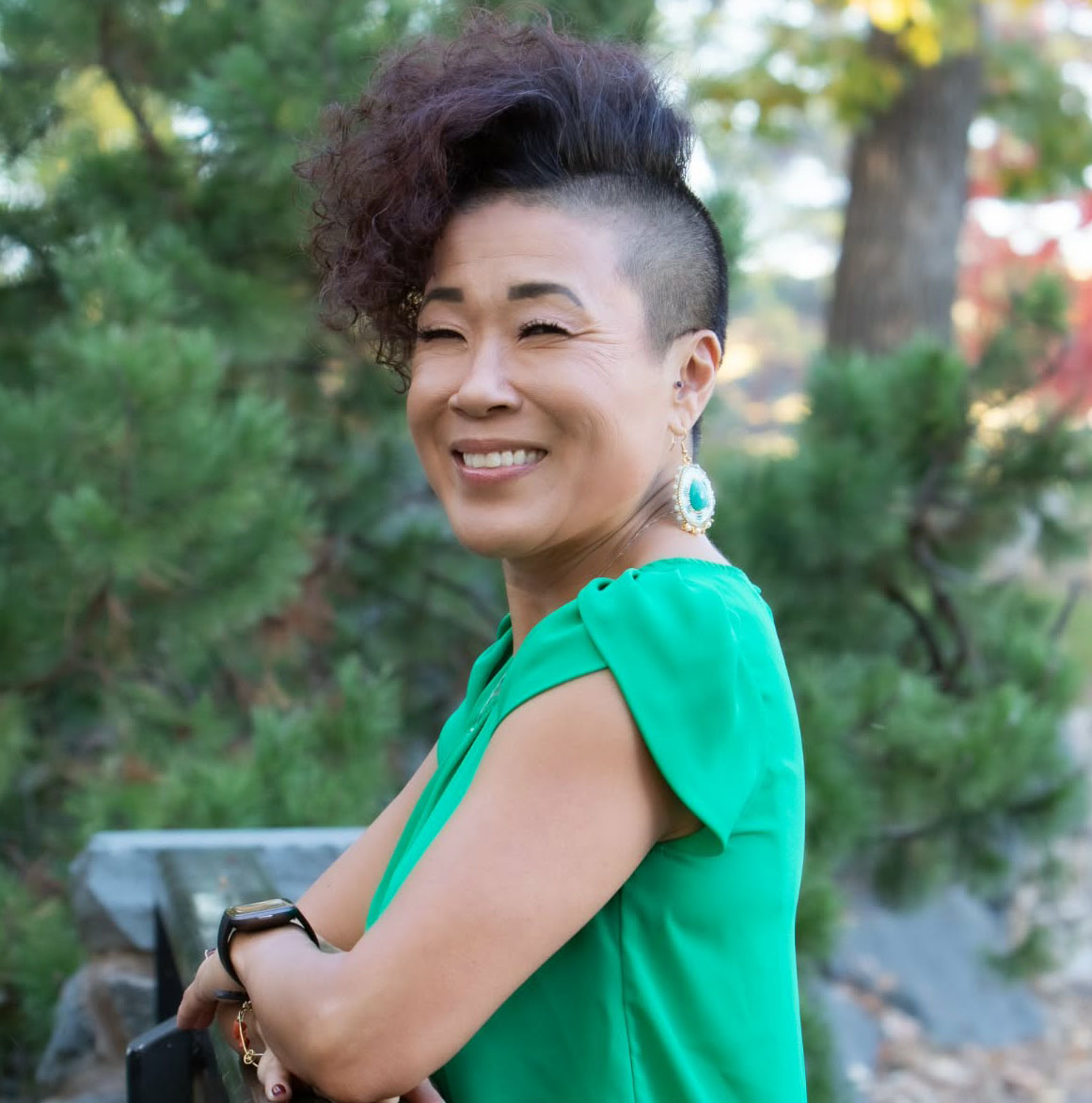
One adoptee’s reflections on the recent No Kings protest in Minnesota | By Brook Mallak (Spring 2026)
While the national headlines debated the logistics of policy, my reality had become a fractured existence. I found myself living simultaneously in two conflicting worlds. In one camp, I was a “U.S. citizen with nothing to fear” — a person with no criminal history and a deep respect for the institutions I serve as an attorney. In the other camp, I was a “U.S. citizen with everything to fear,” watching a growing movement aimed at racially and ethnically cleansing the country I call home.
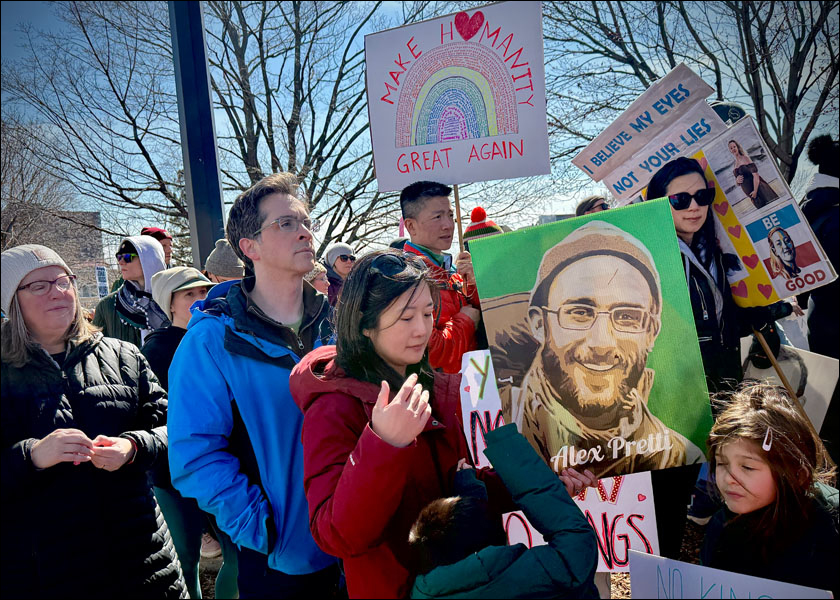
I began staying home more, the walls of my house becoming both a sanctuary and a cage. I watched the news of Alex Pretti’s murder and felt the shadow of the ICE Goon Squad lengthening over my own neighborhood. I wondered if the administration’s mission to overturn birthright citizenship would eventually come for my naturalized status.
This wasn’t just political theory anymore. It was personal. It was physical. And then, the hypothetical threat finally sat down at the end of my driveway.
The trip to the store was only a mile, but by the time I pulled back into my driveway on the morning of January 24, the world had shifted. A running SUV sat idling just around the corner, one house away. To anyone else, it was a neighbor waiting for a friend or a delivery driver checking a map. To me, a Korean-born U.S. citizen in the era of Operation Metro Surge, it was a predator.
I scurried inside, my heart hammering a rhythm I can only describe as anxiety terror. I am an attorney; I have spent my career navigating the intricacies of the law, believing in the structural integrity of citizenship. But as I drew the shades and retreated to my basement to watch my security cameras on the television, that professional shield felt like wet paper.
I sat in the dark, mentally triaging all the if/then scenarios. If they kick down the front door, do I go willingly? Do I trust the protections my citizenship is supposed to provide? The bitter truth hit me then: While the law says I am a citizen, the rhetoric of the day says I am an enemy. I am a fighter by nature, but that morning, the only plan I could formulate was to flee.
The fear I felt in that basement wasn’t born in a vacuum; it was the culmination of a lifetime of what I call “quiet exclusions.” Growing up as a Korean adoptee in greater Minnesota, my citizenship was a fact, but my belonging was always a question.
I have spent decades navigating the derogatory aggressions that define the life of any person who, for reason of race, religion or ethnicity, feels like an outsider in their own home. It is the blunt trauma of slurs like “chink” or “gook,” but more often, it is the death by a thousand cuts found in the overtly polite curiosity of my neighbors.
“Where are you from?” “No, where are you really from?” “Your English is so good.”
These comments are usually wrapped in insulating layers of language like “I didn’t mean it that way,” but the subtext is always the same: You are something else. You are a guest whose stay is conditional. When people tell me I shouldn’t be offended because their intent wasn’t malicious, they strip away my agency. They are saying that because I am not Caucasian, I don’t have the right to define my own pain.
For years, I used my citizenship as a shield against those stares and whispers. I told myself I was a “Real American,” with the papers to prove it. But when the rhetoric of the current administration changed its immigration policy to what amounts to ethnic cleansing, that shield shattered. The “Where are you from?” of my childhood has evolved into the “Why are you still here?” of my adulthood.
By January 29, the fighter in me had been temporarily silenced by the refugee. I boarded a plane with a one-way ticket to Maui to stay with my sister, carrying a heavy shroud of guilt. As a lawyer, I felt I should be staying to fight for my fellow victims; as a human, I just wanted to breathe without checking a security feed.
But as the Pacific stretched out beneath me, a new kind of feeling, what I call “anxiety terror,” took root. I began to wonder: Should I ever return? Should I become an ex-pat?
The realization was a cold one. I felt “not American enough” for the current administration, but not nearly “Korean enough” to find a home in my country of birth. To be a transracial adoptee in this moment is to live in a permanent state of mid-air exile. You are a person without a port, watching the country that raised you — the only home you’ve ever known — treat you like a foreign contagion.
I looked at the blue water and realized the true cost of the rhetoric back home. It doesn’t just threaten your physical safety; it robs you of your sense of place. If I returned to Minnesota, would my neighbors turn me in? Would my presence put my friends at risk? When you aren’t truly accepted anywhere, trust becomes a luxury you can no longer afford.
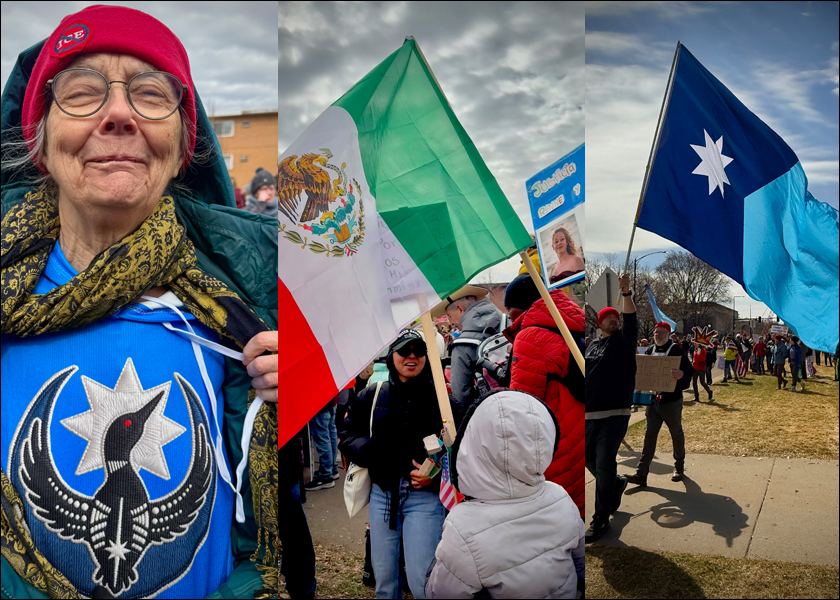
I returned to Minnesota on February 21, trying to acclimate to a “normal” that no longer existed. As the March 28 No Kings protest approached, I hesitated. My family was facing health crises, and I had already marched in last year’s (June 2025) No Kings protest. But the “anxiety terror” was still there, a low hum in the back of my mind that wouldn’t quiet down.
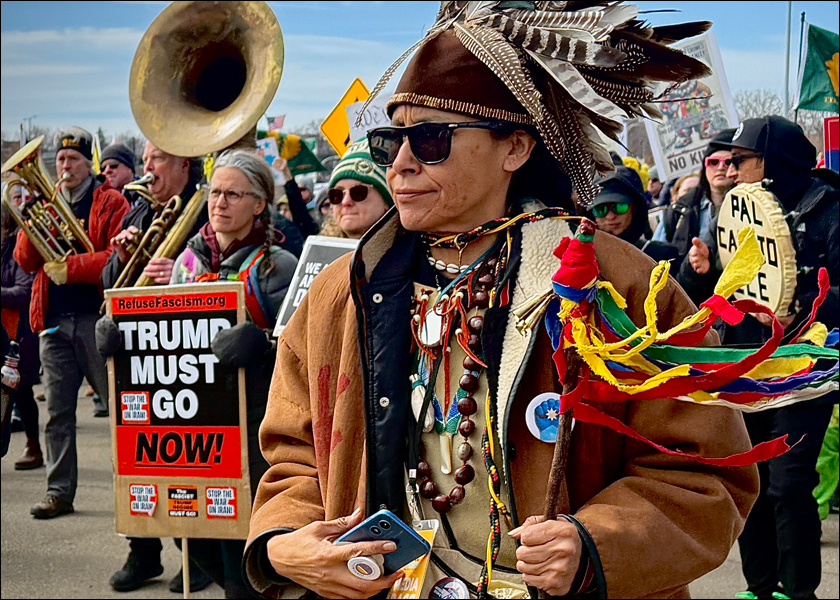
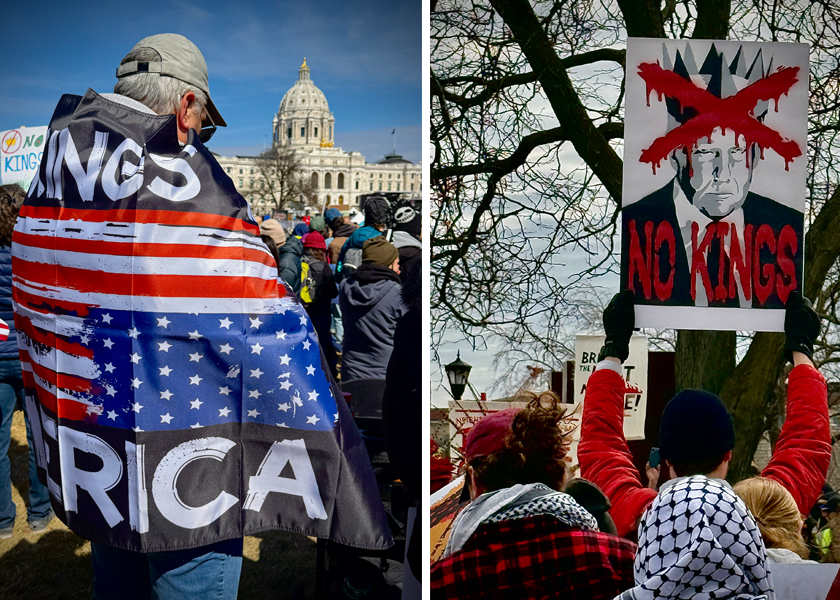
Ultimately, a friend and I joined the 100,000 people (editor’s note: actual attendance numbers, at time of publication are estimated to be closer to 200,000) at the State Capitol. As a lawyer, I am supposed to be a master of language, but standing in that crowd, words failed me.
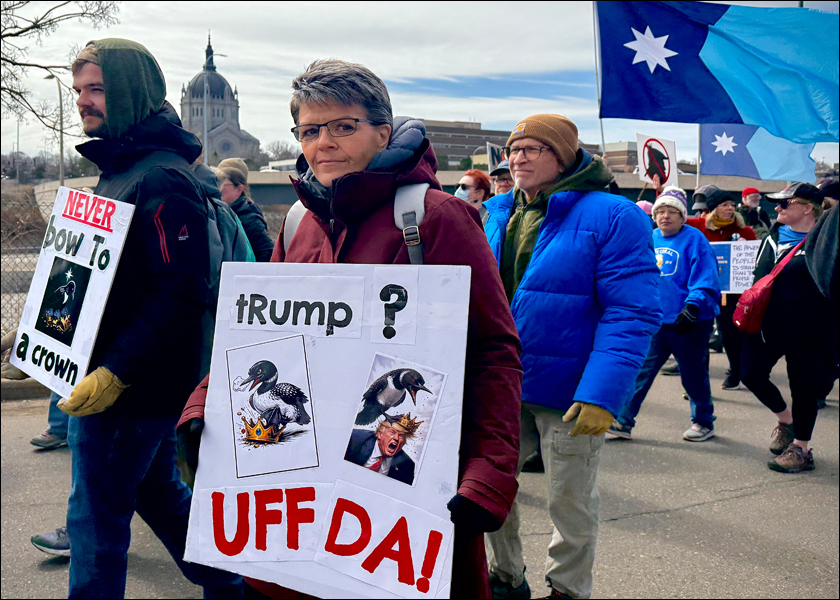
It felt like the best hug I’ve ever had — the kind full of love, understanding, and a peace that passes understanding. We were there for reasons of grave seriousness, but the flames of my internal rage were quelled by a sudden, overwhelming sense of solidarity.
I knew, logically, that 100,000 people weren’t there specifically for me. But as a Korean-born citizen who has spent a lifetime trying to assimilate, it felt like they were. For the first time in weeks, the “duct tape” the administration tried to use to silence me was peeled away. In its place was the roar of a country refusing to let its neighbors be turned into enemies.
As a former distance runner, I used to rely on the cheers of strangers along the race route to keep me moving when I wanted to quit. The St. Paul protesters were those strangers. They reminded me that while the toddler tantrums and lies of the current leadership are loud, the quiet strength of community is louder.
I am an attorney. I am a runner. I am a Korean-born American. And after that day at the Capitol, I am no longer hiding in the basement. I am here, I survived the tyranny of the moment, and I am ready for the future.
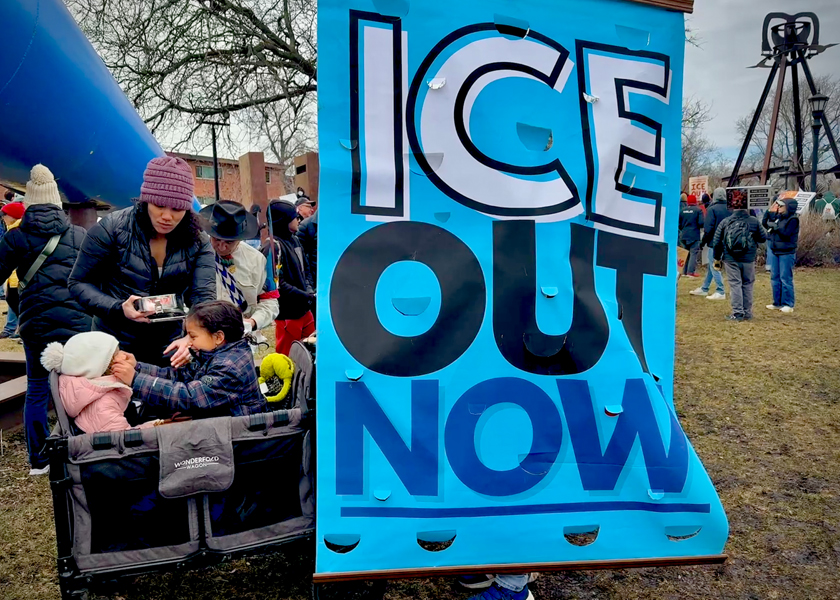
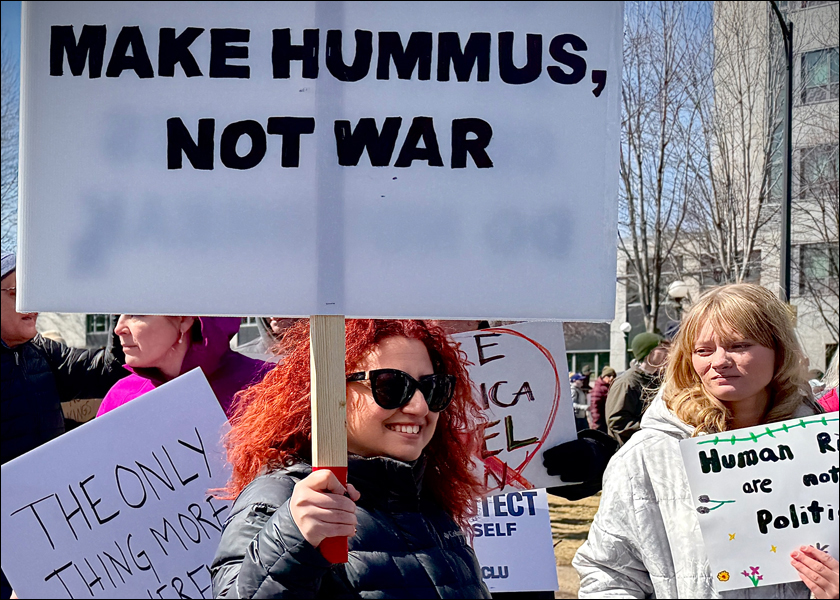
More images from the March 28 rally in St. Paul (photos by Stephen Wunrow):